
How We Rethought M&A Cyber Due Diligence
Woodlands Advisory has built proprietary internal tooling for M&A cyber due diligence — and what that means for report quality and financial precision.
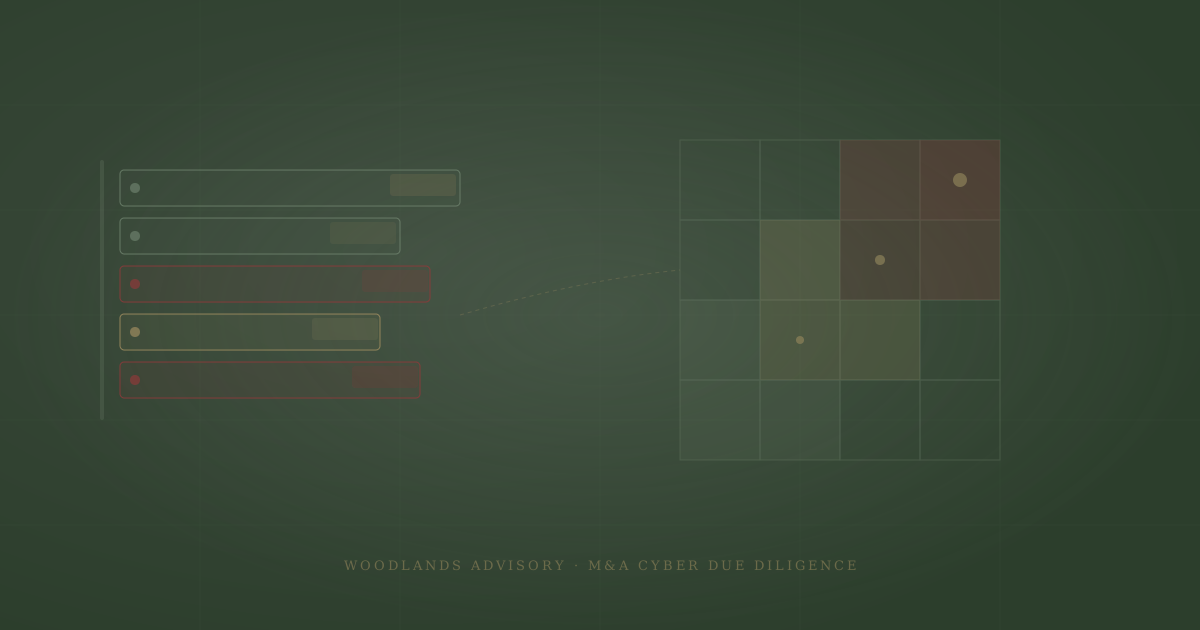
M&A processes compress everything. Four to six weeks of due diligence for a transaction where technical risks determine whether the deal closes — and at what price.
In that window, a cyber due diligence report must not merely be complete. It must be defensible, traceable, and directly decision-relevant.
The problem with the status quo was never a lack of expertise. It was the tooling.
Findings in Excel — Functional, but Does Not Scale
Anyone running M&A cybersecurity seriously quickly encounters a familiar constraint: findings collected in Word documents, financial impacts estimated in spreadsheets, reports assembled manually. The output depends on who last edited the file — and the risk of inconsistent severity ratings or underestimated financial exposure is real.
Not because analysts are unreliable. But because the tooling does not allow better.
Internal Infrastructure: Reproducibility as a Quality Standard
Woodlands Advisory has developed an internal structured platform for M&A cyber due diligence — known internally as Meridian.
Meridian is not a product, and it is not SaaS. It is proprietary internal infrastructure: built to systematically raise the quality and reproducibility of our audits, and to translate what previously depended on individual analyst experience into structured, traceable processes.
The result: every finding follows a defined evaluation framework. Financial impacts — regulatory exposure, business disruption, reputational damage — are calculated based on the target company and transaction context, not estimated. Reports do not materialise at the end of an engagement: they develop with each finding entered.
What Changes for Clients
The visible change is the report. The Executive Red-Flag Report our clients receive is more structured, available earlier in the engagement, and more precise in its financial statements than before.
What does not change: judgement. Meridian calculates — but does not decide. Whether a specific finding is a dealbreaker in a given transaction context, or can be addressed through a price adjustment, is a strategic assessment. That continues to rest with the advisors.
Precise tooling enables good judgement. It does not replace it.
Why Proprietary
Standard compliance platforms solve a different problem: ongoing governance, continuous monitoring, post-certification maintenance. Important tasks — but not M&A tasks.
M&A due diligence has its own rhythm: a tight timeframe, high decision pressure, a clearly defined scope, and a direct connection to transaction price. A platform built for this context looks different from one optimised for continuous compliance management.
Meridian is built for this context.
Data Sovereignty as an Advisory Principle
Meridian runs on German servers — self-hosted, without third-party dependencies for transaction-critical data. Targets in M&A processes are typically companies not yet public. The confidentiality of their technical infrastructure is non-negotiable.
This is not a technical footnote. It is an advisory principle.
Next Step
If you are in an M&A transaction and want to assess the target's cyber risks in a structured — and financially quantified — way: reach out.
Share this article
Let us discuss your specific situation.
20 minutes. Confidential. Non-binding.
Schedule initial consultation →← Back to all articles